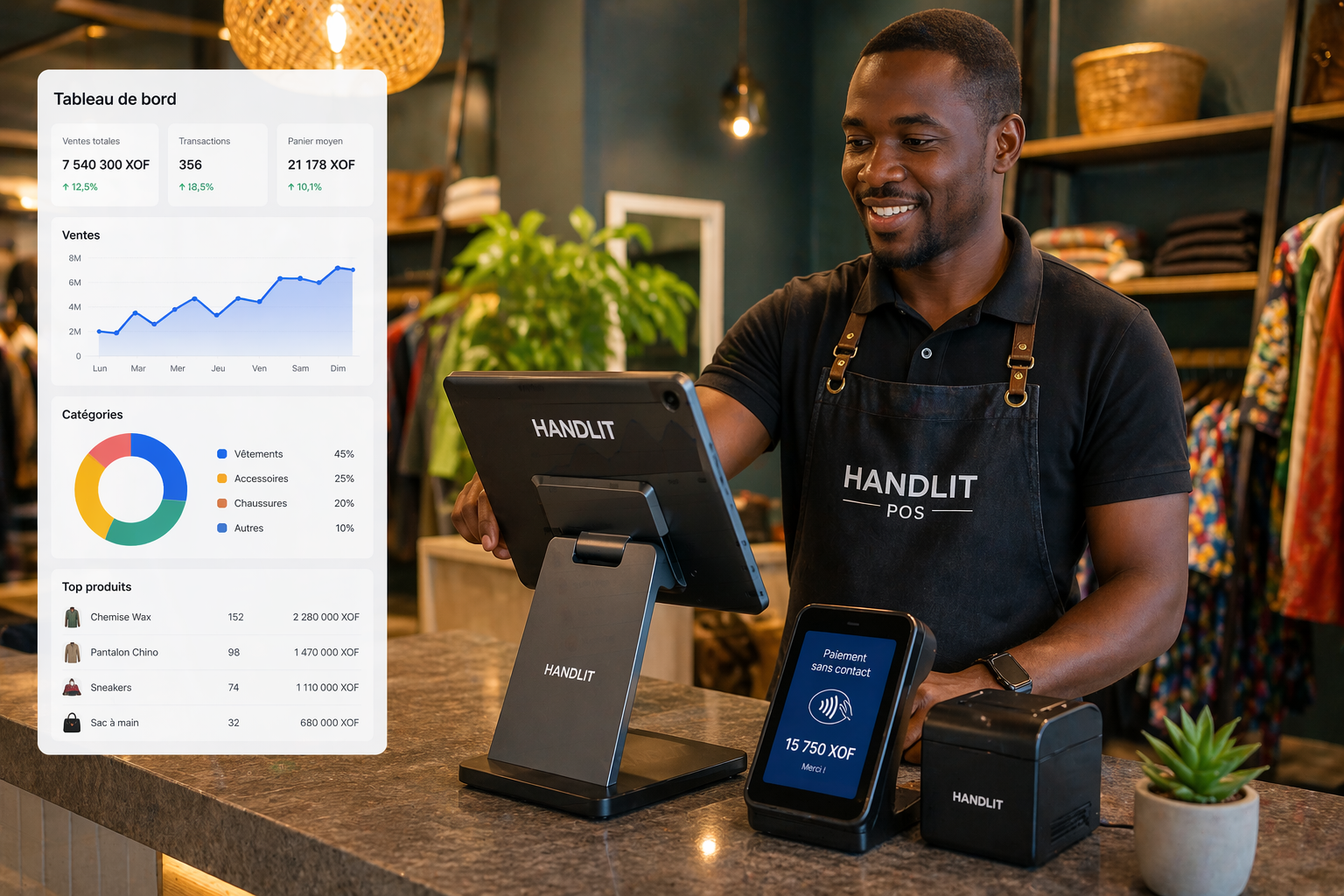
Why an Intelligent POS System is Essential for Businesses in 2026
Discover why an intelligent POS system has become essential for businesses in 2026. Benefits, trends, and tips for choosing the best solution.
Why a Smart POS System is Absolutely Essential for Retail in 2026
Introduction: The Silent Revolution at the Checkout Counter
In a rapidly evolving retail landscape, digitalization is no longer just a competitive advantage—it is a matter of pure survival. In 2026, consumer expectations have reached unprecedented heights. Shoppers demand speed, seamless interactions, highly personalized journeys, and absolute consistency between what they browse online and what they experience in-store.
To meet these immense challenges, the traditional cash register or the basic standalone credit card terminal are completely obsolete. The evolution of retail technology has fundamentally transformed the central nervous system of brick-and-mortar stores: the Point of Sale (POS) system.
Today, running a successful business relies on real data rather than gut feeling or scattered spreadsheets. Store owners require a centralized, intelligent, and predictive ecosystem capable of turning every single transaction into actionable business intelligence. In this comprehensive guide, we explore why adopting a smart POS system is the definitive cornerstone for retail success and scalable growth in 2026.
What Exactly is a Smart POS System in 2026?
A smart POS system is far more than a tool for processing payments. It is an advanced, cloud-based hardware and software platform that acts as the operational brain of your entire business. It bridges the gap between sales, inventory logistics, customer relationship management (CRM), and accounting in real time.
Powered by artificial intelligence (AI) and open APIs, these modern solutions do not merely record financial streams; they actively analyze, predict, and automate your daily workflows.
Traditional Register vs. Smart POS: The 2026 Comparison
To understand why switching to a digital system is unavoidable, here is a point-by-point comparison between the old-school model and modern intelligent solutions.
1. Data Storage and Security
Traditional Register: Storage is strictly local. This means if your hardware breaks, is stolen, or suffers damage (fire, water damage), you lose your entire sales history and accounts forever.
Smart POS: All data is backed up in a secure Cloud. You can access your figures from anywhere in the world in real-time. Even if the tablet in the shop is broken, your data remains safe and accessible on any new device.
2. Inventory Management
Traditional Register: Management is manual. You have to close the shop or spend entire nights counting items for inventory. Entry errors are frequent, and stockouts are often only noticed when it is too late.
Smart POS: Everything is automated and predictive. Stock levels update with every scan. In 2026, AI analyzes your sales patterns to send an alert before you run out and can even automatically draft purchase orders for your suppliers.
3. Customer Relationship Management (CRM)
Traditional Register: It is non-existent or limited. At best, you have paper loyalty cards that customers lose. You have no idea who your best customers are or what they prefer.
Smart POS: A CRM is directly built-in. You can identify a customer in one click, view their purchase history, and send digital "e-tickets" directly via email or WhatsApp. You can create personalized loyalty programs that work both in-store and online.
4. Performance Analytics
Traditional Register: You only get basic end-of-day reports (the standard "Z-report"). You know how much cash you took in, but not which products generated the best margin or which hours required more staff.
Smart POS: You benefit from Real-Time Business Intelligence. Clear dashboards show your net margins, your "star" products, and your revenue trends compared to previous months.
5. Connectivity and Ecosystem
Traditional Register: It is an isolated tool. It does not communicate with your website, your accounting software, or your marketing tools.
Smart POS: It is an open ecosystem. Your physical shop is synced with your e-commerce site: if you sell the last pair of shoes online, they are instantly removed from the in-store stock to prevent double-selling.
6. Operational Reliability
Traditional Register: It is often totally dependent on constant electricity or a stable internet connection for newer transitional models.
Smart POS: It features an intelligent offline mode. Staff can continue recording sales normally even during network outages. As soon as the connection returns, the system automatically syncs everything without human intervention.
Why this choice is strategic
By moving away from the rigid model of the traditional register to the flexibility of a smart POS, you aren't just changing a tool; you are upgrading your management style. You move from "reactive" mode (noticing problems after they happen) to "proactive" mode (anticipating growth).
The 5 Core Pillars of Profitability Powered by a Smart POS
Investing in a next-generation point of sale radically upgrades your day-to-day operations. Here is exactly how a smart POS directly drives your revenue and bottom-line profitability.
1. Massive Time Savings and Workflow Automation
Human error is expensive. From manual price entry to end-of-day cash register discrepancies, outdated manual processes drain your team's valuable energy. A smart POS automates:
Bank and accounting reconciliation.
Complex tax calculations and profit margin tracking.
Employee shift scheduling and sales commission payouts.
The Result: Your staff spends far less time buried in administrative paperwork and more time engaging, advising, and retaining your customers.
2. Surgical, Predictive Inventory Management
Inventory is where your store's capital is locked up. Overstocking ties up crucial cash flow, while stockouts lead to immediate customer frustration and lost revenue.
Leveraging predictive algorithms, a 2026 smart POS analyzes historical sales data, seasonal shifts, and local buying trends to:
Instantly update stock levels across all channels the moment an item is scanned.
Automatically generate purchase orders for your suppliers before a stockout occurs.
Maintain complete batch and expiration tracking (vital for food, beverage, and pharmacies).
3. Business Intelligence (BI) for Data-Driven Decisions
Why guess when you can know? From a mobile app or web browser, owners can instantly access mission-critical metrics anywhere in the world:
What are your exact peak traffic days and hours?
Which specific products generate 80% of your net profit?
Who are your highest-performing sales associates?
These deep insights allow you to dynamically adjust pricing, optimize store layouts, and schedule staff with absolute surgical precision.
4. Hyper-Personalized Customer Experiences (CRM)
The 2026 consumer expects to be recognized. When a customer approaches the counter, a smart POS instantly pulls up their profile: past purchases, brand preferences, sizing, and accumulated loyalty points.
The system allows you to issue eco-friendly digital receipts via email or WhatsApp and automatically triggers highly targeted marketing campaigns (e.g., "Enjoy 15% off your favorite sneaker brand for your birthday!").
5. Seamless Omnichannel Retail (Phygital Integration)
The dividing line between physical and online stores has vanished entirely. If you sell via Shopify, WooCommerce, or major online marketplaces, your POS must actively sync your shared inventory. Customers expect to buy online and pick up in-store (Click & Collect) flawlessly, or easily return an online order at a physical location.
The Hidden Growth Lever: How a Smart POS Boosts Local SEO
Retailers rarely associate their checkout software with Search Engine Optimization (SEO) or digital growth. Yet, in 2026, the synergy between the two is undeniable.
Supercharging Local SEO via Google Local Inventory
Searches for "product X available near me" continue to skyrocket. Modern smart POS systems directly integrate with Google Business Profiles. When your POS updates your stock levels locally, it automatically pushes that data to Google Maps and Search, showing nearby shoppers that the exact item they want is sitting on your shelves right now. This is a massive driver of highly qualified foot traffic.
Automated Customer Review Generation
Digital receipts sent via email or text message contain direct links for customers to leave reviews on platforms like Google or Trustpilot. By automatically triggering a polite review request a few hours after a positive purchase experience, you dramatically boost your volume of 5-star ratings, propelling your local SEO rankings to the top.
Leveraging First-Party Data
With third-party tracking cookies largely phased out, owning your own verified customer database is a goldmine. The compliant, first-party data collected through your POS allows you to build highly accurate "Lookalike" audiences on social media ad platforms, drawing in new shoppers who mirror the buying habits of your most profitable existing customers.
Top 4 POS Technology Trends Dominating 2026
To keep your business ahead of the curve, look for these embedded innovations in top-tier POS systems this year:
SoftPOS (Tap-to-Pay on Mobile): Bulky, expensive terminals are disappearing. Sales associates can now accept contactless card or mobile payments anywhere on the store floor using a standard professional Android tablet or smartphone.
Generative AI Assistants: Built-in voice or text assistants allow store managers to ask natural questions like, "How many red jackets did we sell this month compared to last October?" and instantly receive beautifully rendered visual charts.
Instant Alternative Payments: Native support for mobile wallets (such as Mobile Money, Apple Pay, Google Pay, instant QR-code transfers, and stable cryptocurrencies) ensures you never lose a sale due to payment friction.
Eco-Friendly Cloud Architecture: Highly optimized software designed to consume minimal bandwidth and processing power, extending the hardware lifespan of your devices.
Buyer’s Guide: Essential Criteria for Choosing Your POS Setup
Selecting the right POS is a pivotal business decision. Here is your mandatory checklist for 2026:
[ ] Flawless Offline Functionality: Commerce must never stop, even during unexpected network outages. Your system must run locally and auto-sync all data the moment internet access returns.
[ ] Intuitive User Experience: Retail staff turnover can be high. A new employee must be able to confidently operate the register with less than 30 minutes of training.
[ ] Robust API Integrations: Ensure the platform natively connects with your preferred accounting software, e-commerce platform, and email marketing tools.
[ ] Ironclad Security & Compliance: Look for end-to-end data encryption and complete adherence to local tax authorities and anti-fraud regulations.
[ ] Responsive Technical Support: Prioritize providers offering 24/7 customer support, preferably with dedicated local representatives or instant live-chat troubleshooting.
Conclusion
In 2026, adopting a smart POS system is no longer a luxury reserved for massive retail chains—it is the foundational infrastructure required for any thriving retail store. It serves as the ultimate bridge between physical realities and digital opportunities.
By automating mundane administrative tasks, safeguarding your inventory, delighting shoppers with hyper-personalized journeys, and actively boosting your online search visibility, an intelligent POS transforms operational headaches into powerful levers for growth. Retailers who choose to invest in these smart technologies today do more than save time: they secure a permanent, unbeatable edge over the competition.
Get our tips
Tips for better managing your shop, delivered straight to your inbox.